
A Letter from Bishops of the ELCA to the Church
October 8, 2025
A Letter from Bishops of the ELCA to the Church
Beloved in Christ,
Grace and peace to you in the name of our Lord and Savior, Jesus Christ.
As bishops of the Evangelical Lutheran Church in America (ELCA), we write to you in this moment of national and global tension with clarity and conviction. Our faith compels us to stand where Jesus stands—with and for those whom society often seeks to exclude, erase, or diminish.
Our shared confession that every person is created in the image of God (Genesis 1:27) grounds us in the conviction that all people possess inherent dignity. The incarnation of Jesus Christ reveals God’s profound solidarity with humanity—especially with those who are marginalized or oppressed. The gospel we proclaim insists that our neighbor’s need is the occasion for our love and that our public life is shaped by justice, mercy, and a commitment to the common good.
Further, we have a shared tradition in our social teachings which grounds us. The ELCA’s Social Message on Immigration reminds us:
“We are to respond to newcomers as we would to Christ—welcoming them, meeting their immediate needs, and advocating for justice in our laws and policies.”
Likewise, our recently adopted Social Statement Faith and Civic Life affirms that Christians are called to be “a public witness, holding leaders accountable when they fail to protect the vulnerable.”
We are living through a time when vulnerable communities are being scapegoated and attacked. Immigrants and refugees are vilified, though Scripture commands us to welcome the stranger. People of color continue to bear the devastating weight of racism woven into the fabric of our society. Transgender people, beloved by God, are being targeted with laws and rhetoric that deny their dignity and even their right to exist. These assaults on our siblings are not political abstractions—they are deep wounds in the body of Christ.
In this time of division and fear, we, as people grounded in our faith, insist on love. This commitment flows from our faith in Christ crucified and risen—the One whose love breaks down barriers, confronts hatred, and transforms hearts.
Love insists on the dignity of every human being.
Love insists on justice for the marginalized and oppressed.
Love insists that the church must reflect God’s diverse, life-giving community.
Love insists that we listen, speak, and act with respect, even in disagreement.
Love insists on hope, trusting that God’s kingdom of justice and peace will prevail.
This love also compels us to speak clearly against Christian Nationalism, which our Churchwide Assembly named as a distortion of the Christian faith and an unhealthy form of patriotism. Christian Nationalism confuses the Gospel with political power, turns God into a mascot for the state, and privileges some people over others based on race, religion, or birthplace. This is not the way of Jesus. The kingdom of God is not a nation, not a culture, not a political ideology—it is God’s reign of love, justice, and mercy for all people.
Therefore, as bishops of this church, we declare that the ELCA cannot be silent. Our call is clear:
• To proclaim the God-given dignity of every human being.
• To resist systems and ideologies, including Christian Nationalism, that oppress, dehumanize, or erase.
• To stand shoulder to shoulder with those who are targeted or harmed.
• To bear public witness that the love of Christ is stronger than fear, stronger than hatred, and stronger than death.
We call on all members of the ELCA to join us in prayer, advocacy, and action:
• Pray for those who are vulnerable and for all who work for justice.
• Advocate in your communities, legislatures, and Congress for laws that protect migrants, advance racial justice, and safeguard LGBTQIA+ people.
• Engage in the holy work of hospitality, creating spaces of safety, affirmation, and belonging for all God’s children.
• Model respectful dialogue in a polarized world, seeking understanding rooted in love.
• Hold fast to hope, trusting that the Spirit is still at work renewing creation and reconciling the world to God.
In baptism, we are marked with the cross of Christ forever. That cross is not only a sign of our hope—it is also a summons to follow Jesus into solidarity with those who suffer.
In the power of the Spirit, let us be bold. Let us be faithful.
Let us Insist on Love—in our words, our actions, our public witness, and our life together.
Together in Christ,
Bishop Kevin Strickland Southeastern Synod ELCA
Bishop Susan J. Briner Southwestern Texas Synod
Bishop Becca Middeke-Conlin Arkansas-Oklahoma Synod
Bishop Vivian Davila Caribbean Synod
Bishop Donna Simon Central States Synod
Bishop Bill Gohl Delaware-Maryland Synod
Bishop Anne Edison-Albright East Central Synod of Wisconsin
Bishop Pedro Suarez Florida-Bahamas Synod
Bishop Deborah Hutterer Grand Canyon Synod
Bishop Paul Erickson Greater Milwaukee Synod
Bishop Felix Malpica La Crosse Area Synod
Bishop Stephen R. Herr Lower Susquehanna Synod
Bishop Wayne Miller Metropolitan Chicago Synod
Bishop Katrina D. Foster Metropolitan New York Synod
Bishop Philip C Hirsch Metropolitan Washington, D.C. Synod
Bishop Jen Nagel Minneapolis Area Synod
Bishop Scott Alan Johnson Nebraska Synod
Bishop Nathan Pipho New England Synod
Bishop Christa Compton New Jersey Synod
Bishop Emily K. Hartner North Carolina Synod
Bishop Julie Schneider-Thomas North/West Lower Michigan Synod
Bishop Kevin Jones Northeastern Iowa Synod
Bishop Amy Odgren Northeastern Minnesota Synod
Bishop Laura Barbins Northeastern Ohio Synod
Bishop Christopher deForest Northeastern Pennsylvania Synod
Bishop Katherine Finegan Northern Great Lakes Synod
Bishop Stacie Fidlar Northern Illinois Synod
Bishop Erik Gronberg Northern Texas-Northern Louisiana Synod
Bishop Meggan Manlove Northwest Intermountain Synod
Bishop Martin Halom Northwest Synod of Wisconsin
Bishop Shelley Bryan Wee Northwest Washington Synod
Bishop Daniel G. Beaudoin Northwestern Ohio Synod
Bishop Kristen Papson Northwestern PA Synod
Bishop Laurie Larson Caesar Oregon Synod
Bishop David Nagler Pacifica Synod
Bishop Meghan Johnston Aelabouni Rocky Mountain Synod
Bishop Jeff R. Johnson Sierra Pacific Synod
Bishop Ginny Aebischer South Carolina Synod
Bishop Joy Mortensen-Wiebe South-Central Synod of Wisconsin
Bishop Amy Current Southeastern Iowa Synod
Bishop Bryan Penman Southeastern Pennsylvania Synod
Bishop Brenda Bos Southwest California Synod
Bishop Melissa L. Stoller Southwestern Pennsylvania Synod
Bishop Keith Marshall Southwestern Washington
Bishop Tracey Breashears Schultz Texas-Louisiana Gulf Coast Synod
Bishop Craig Miller Upper Susquehanna Synod
Bishop Lee M. Miller II Upstate New York Synod
Bishop Phyllis Milton Virginia Synod
Bishop Scott Dalen Western Iowa Synod
A Test of Our Character
From the Bishop
A Test of Our Character
I write this on the morning of November 6th following the results of our national election. I write it to the people of the Pacifica Synod and the wider Church of Jesus.
Grace and peace to you!
What the election results tell us is that we are a purple country. Furthermore, our denomination is a purple church. Our information silos and the algorithms that feed them made us believe that most people think like we do. Progressives think that the church or nation is progressive, and conservatives do the same. We have greatly underestimated the political diversity of our neighbors. Both conservative and liberal subgroups have been led to believe that the country overwhelmingly holds the same values dear. That is not the case.
The emotions that we are feeling are also diverse. Some of us are deeply saddened. Others are angry. Still others are excited and joyful. While many are confused and fearful.
I offer us two important things to do in these coming days.
First, feel your feelings.
Whatever you are feeling needs to be experienced and not dismissed. Before we rush off to decide what we are going to do next, please take time to feel what you are actually feeling. Where is it in your body? Can you locate it? Invite the Spirit to attend to it. If you are grieving this is especially true as grief has its own timeline and won’t be hurried.
Second: Go to church this coming Sunday
The second thing I invite us to do will reveal the character of our faith communities. Go to church this coming Sunday and share communion with your siblings in Christ. Know that we don’t all hold the same opinions or feel the same emotions, but we share in one bread, one cup, one God. Isolating, blaming, expelling or shaming are not part of the welcome to the table that Jesus offers us all. It may not yet be time for healing words between people who have opposing political views, but there is an opportunity to lean into the inclusive universal love of God when we come to the Lord’s table. Touch the baptismal water as you enter the sanctuary. Remember the promise of God’s steadfast love and know that it is for you.
“This is exactly the time when the church needs to show up as the church.”
We proclaim God’s unconditional love, and we take care of one another in spite of all that divides us. Know that I am praying for all of us. May God give us strength, love, and grace.
Peace, Bishop Dave
Interview with a young poet from Rafah in Gaza
What a Rafah poet wants you to know about his city
09:31
February 16, 2024
A picture taken from Rafah shows smoke billowing during Israeli bombardment over Khan Yunis in the southern Gaza Strip on Feb. 11, 2024, amid the ongoing conflict between Israel and the Palestinian Hamas militant group. (Said Khatib/AFP via Getty Images)
Here & Now's Scott Tong speaks with Mohammed Abu Lebda, a poet and translator from Rafah.
This segment aired on February 16, 2024.
Israel Hamas War
As of December 28, 1.9 million Gazans have been displaced – 85% of the population. 20,000 Gazans have been killed, most of them women and children. 61 journalists have been killed.
Michael Rinehart, the author of this blog, is Bishop of the Texas-Louisiana Gulf Coast Synod, Evangelical Lutheran Church in America, a community of over one hundred congregations, campus ministries, retreat centers, and other agencies.
On October 7, 2023, Hamas, the PFLP, and the DFLP brutally attacked civilians in Israeli territory during Sukkoth.
“As people of faith, let us pray for peace, call for peace, and work for peace, so that all Israelis and Palestinians may live in peace and safety.”
They fired 3,000 rockets and attacked civilians, including a music festival. There were 1,200 deaths, including 30 children. They took 250 hostages, including 38 children. Hamas cited the Israeli occupation and the blockade of Gaza as the cause for the attack, but Hamas is a terrorist organization that has long worked for the end of Israel.
We unequivocally condemn these brutal attacks, the firing of rockets, and also Hamas’ torturing, and executing of both Palestinian and Israeli citizens. see Bishop Eaton’s statement below. 44 nations have condemned the attack.
It’s hard to understand what Hamas thought they might accomplish here. They had to know it would elicit a deadly response. They have only made things worse for everyone in the region.
Hamas has 25,000 members among the 2.5 million inhabitants of Gaza. They have brutalized their own people, but are also supported by some who have had home bulldozed as settlers expand into the occupied territories.
On October 13, Israel ordered the evacuation of northern Gaza, including Gaza City, to southern Gaza, but then it bombed the places to which people evacuated. A ground invasion began October 27. In six days, 6,000 bombs were dropped, including many 2000 pound bombs that kill people 1000 miles away. Many of these were dropped into densely populated areas. Numerous Israeli hostages were killed in the bombings.
Israel also instituted a complete blockade, allowing no food or water in.
Egypt brokered a conversation about a cease-fire. Hamas agreed to release women, children, sick, and elderly in exchange for a five day cease-fire. Netanyahu rejected it, but in time would agree after receiving pressure from hostage families who felt release of hostages should be the highest objective.
The abducted and Missing Families Forum, an Israeli group representing hostage families, said they would release of all Palestinian prisoners in exchange for the release of all Israeli hostages. This too was rejected.
The UN security council called for the immediate release of all hostages, and a humanitarian ceasefire. this was strongly supported by Amnesty International and Human Rights Watch.
On October 31, Israel bombed the Jabalia refugee camp, drawing swift condemnation by many countries, including Bolivia, Honduras, Chile, Columbia, Honduras, Jordan, Turkey, Chad, Bahrain, South Africa, and others.
Finally, November 24-December 1 there was a brief ceasefire, at first five days, but eventually extended to seven days. An hour before the cease-fire was to end, Israel reported a rocket being intercepted from Gaza. Israel sent out fighter jets and the war was back on.
On December 15, Israeli soldiers accidentally shot dead three Israeli hostages.
As of December 28, 1.9 million Gazans have been displaced – 85% of the population. 20,000 Gazans have been killed, most of them women and children. 61 journalists have been killed. Many more bodies are estimated to be under the rubble. The international criminal court has accused both Hamas and Israel of war crimes.
A December 28, 2023 column in the Israeli paper Haaretz called the starvation of civilians in Gaza a war crime.
The humanitarian crisis is becoming worse by the minute.
Israel, like any country, has the right to defend itself, but massacre does not justify massacre.
We call for an immediate cease fire for all parties, and the immediate return of the remaining Israeli hostages and 7,000 Palestinians in Israeli custody.
As people of faith, let us pray for peace, call for peace, and work for peace, so that all Israelis and Palestinians may live in peace and safety.
Statement on Israel-Hamas
From Presiding Bishop Elizabeth Eaton, ELCA
"My God, my God, why have you
forsaken me?
Why are you so far from helping me, from the words of my groaning?"
—Psalm 22:1
Dear church,
As Lutherans, we are accustomed to holding tension between two truths. Thus the ELCA denounces the egregious acts of Hamas, acts that have led to unspeakable loss of life and hope. At the same time the ELCA denounces the indiscriminate retaliation of Israel against the Palestinian people, both Christian and Muslim.
For the past week we have borne witness to the horrors of the escalating crisis between Israel and Hamas. We also watch a growing humanitarian crisis in Gaza as Israel blocks food, water, fuel and medical supplies and as airstrikes continue to cause unbearable civilian casualties ahead of a just-announced ground assault. We see Israelis and families around the world in the agonizing wait for word about the fate of loved ones killed or taken hostage by Hamas. We are in anguish, grieving and praying for all people who are living in trauma, fear and uncertainty.
Among us are Palestinian Lutherans who are fearful for their families, their communities and their homeland. In our communities we have Jewish and Muslim neighbors, who are also facing the horrors of this crisis and its impact on their loved ones.
It is difficult to find words that suffice in the complexity of this moment, and in the web of relationships that bind us together, as church, with the Evangelical Lutheran Church in Jordan and the Holy Land and our interreligious partners. Yet God has called us to be a people who stand with others amid suffering.
We must also call a thing a thing. The power exerted against all Palestinian people — through the occupation, the expansion of settlements and the escalating violence — must be called out as a root cause of what we are witnessing. We are committed to our long-standing accompaniment of the Evangelical Lutheran Church in Jordan and the Holy Land.
The God who liberates us calls us to be a liberating witness. May it be so.
In Christ,
The Rev. Elizabeth A. Eaton
Presiding Bishop, Evangelical Lutheran Church in America
Things you can do:
Find updated resources and statements from the ELCA here.
Join our partner Churches for Middle East Peace for prayer every Wednesday from 12:30 to 1 p.m. Eastern time. Register here.
Call your lawmakers today through the U.S. Capitol Switchboard at 202-224-3121 and urge them to take action to de-escalate the conflict and uphold unrestricted humanitarian aid to Gaza. Find your member of Congress at GovTrack.
Support Lutheran Disaster Response here.
Opinion: Good Friday reminds us to care for migrants in need. They know the suffering Jesus faced.
Today, we leaders of San Diego Christian denominations, with millions of other people around the world, will observe the Christian holy day of Good Friday, remembering the final hours of Jesus, who on this day, according to tradition, was crucified by Roman authorities in Jerusalem.
On this Good Friday we invite all San Diegans and Tijuanenses to embrace our proud heritage as welcoming people.
BY ROBERT MCELROY, SUSAN BROWN SNOOK, & DAVE NAGLER
APRIL 7, 2023 5:26 AM PT
Cardinal Robert McElroy is a cardinal in the Catholic Church and head of the San Diego Diocese and lives in Linda Vista.
Bishop Susan Brown Snook is bishop of the Episcopal Church of San Diego and lives in San Diego.
Bishop Dave Nagler is bishop of the Pacifica Synod of the Evangelical Lutheran Church of America and lives in San Diego.
Today, we leaders of San Diego Christian denominations, with millions of other people around the world, will observe the Christian holy day of Good Friday, remembering the final hours of Jesus, who on this day, according to tradition, was crucified by Roman authorities in Jerusalem.

But millions of people don’t need ancient rituals to experience the kind of suffering that Jesus knew on the way to his execution. These millions are suffering already on the path of transnational migration.
This past year, according to the United Nations, “the number of people forced to flee conflict, violence, human rights violations and persecution” exceeded 100 million for the first time on record. A good and growing number of this population find their way to our doorstep, the California/Baja California border. Most arrive traveling from south to north, a pattern that goes back generations and can be expected to continue for generations more.
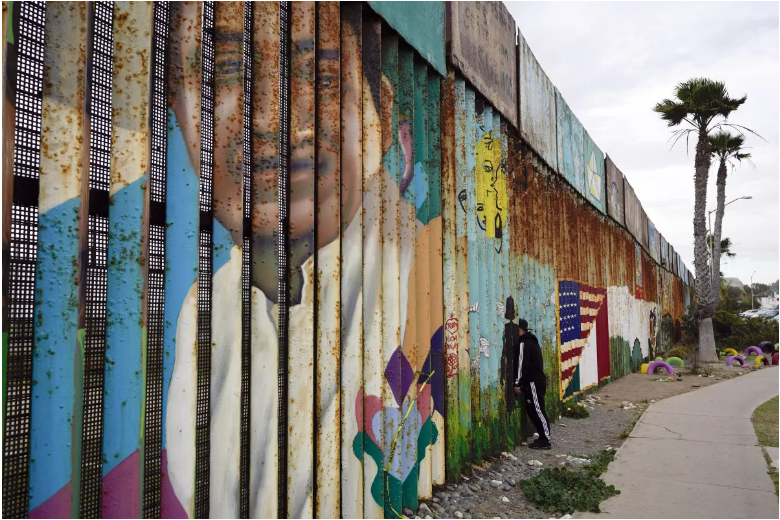
Migrants arriving at the border in Tijuana are confronted by the daunting power of the United States federal government. In the coming year, U.S. Border Patrol agents will apprehend and return to Mexico hundreds of thousands of would-be border-crossers. A few thousand will secure appointments for asylum interviews through the new app (CBP One) created by U.S. Customs and Border Protection officials. Hundreds will end up in the emergency rooms of our San Diego hospitals, having fallen from new 30-foot walls.
As leaders from diverse Christian communities, we are joined as one during this Holy Week. The authors are the local Catholic cardinal, the Episcopal bishop of San Diego and the ELCA Lutheran bishop. We are joined by the United Methodist Bishop Dottie Escobedo-Frank, Catholic Auxiliary Bishop Ramon Bejarano and local Presbyterian Church USA Moderator Rev. Sam Codington.
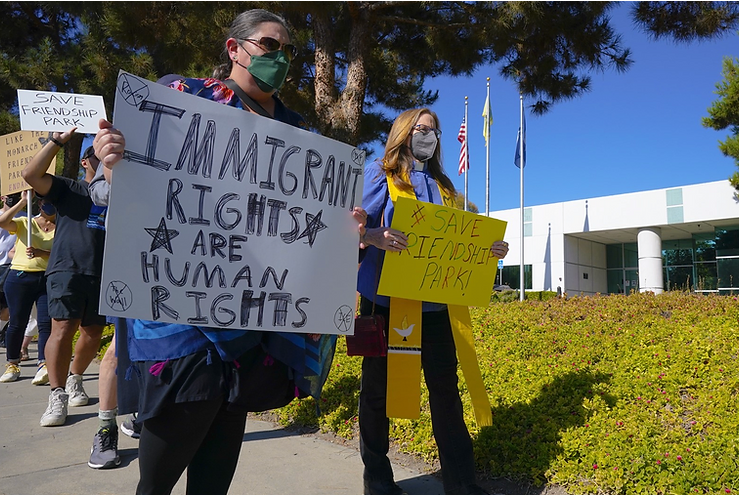
We declare our solidarity with the migrant people of God, and especially those here in our border region. We invite the faithful today to observe the Stations of the Cross on the Mexico side of Friendship Park, the historic binational meeting place overlooking the Pacific Ocean. For generations, Friendship Park has served as a symbol of friendship and belonging to the peoples of our region, longtime residents and newcomers alike.
Sadly, while the Mexico side of Friendship Park remains wide open to the public, U.S. authorities are now erecting two 30-foot walls at this iconic location. Soon these new walls will bring injury and death to a sacred space that has known none before, reminding us that Christ suffers still, in the bodies of migrants and in the peoples of the U.S.-Mexico borderlands.
Both San Diego and Tijuana have proud histories of what the author of the New Testament letter to the Hebrews called “showing hospitality to strangers.” For generations, San Diego has been one of our nation’s most important sites for refugee resettlement, owing in part to our history as a military town.
Tijuana also is a city of migrants. Some 2 million people established residence in Tijuana across the last three decades, most migrating from within Mexico. Tijuana is now a global city, elites drawn to it as an economic and cultural axis of the Pacific Rim, and the poor drawn to it by economic opportunity.
So on this Good Friday we invite all San Diegans and Tijuanenses to embrace our proud heritage as welcoming people. When Christians sing the old gospel hymn, “Were you there when they crucified my Lord?” they recognize Christ’s crucified presence with all who suffer.
But whether or not you count yourself a Christian, we invite you to declare yourself presente with our migrant siblings in the human family to which we all belong.
When we make ourselves available and present to the migrants in our midst, we are following in the footsteps of Jesus, who was, after all, a migrant himself. The Gospel of Matthew tells us that the Holy Family fled as refugees to Egypt after Jesus’s birth to escape persecution. And as an itinerant teacher, Jesus described himself as having “no place to lay his head.” His life and teachings are replete with examples of welcome and hospitality.
Perhaps this is why Jesus embraced his journey to the cross as an expression of God’s calling on his life — why, as one of the earliest Christian hymns exclaimed, he “became obedient to the point of death, even the death of the cross.” In his ultimate act of solidarity with the migrant people of God, Jesus revealed the wondrous love that God holds for us all.
Lenten Altar
Our altar has been richly and beautifully decorated for the season, to accompany our journey towards the cross.

WELCOME TO THE SEASON OF LENT
Our altar has been richly and beautifully decorated for the season, to accompany our journey towards the cross.
Each of the elements that are part of the display are mentioned in the Scriptures, there is a list on the other side of this sheet that you can review and meditate on its meaning during the season.
Each week as you enter the Sanctuary for worship, you are invited to help complete the display by adding one element:
February 26 Lent 1 WATER
March 5 Lent 2 SAND
March 12 Lent 3 ROCKS
March 19 Lent 4 BREAD
March 26 Lent 5 WINE
Here is what the symbols mean and their Scriptural references:
Banner – Whoever does not carry his own cross and come after me cannot be my disciple – Luke 14:27
Water - John answered, “I baptize with water, but among you stands the one you do not know” John 1:26
Sand - Then the spirit led Jesus into the desert to be tempted by the Devil. Matthew 4:1
Stones - Then the Devil came to him and said, “If you are God’s son order these stones to turn into bread.”
Rooster – Jesus said to Peter “I tell you that before the rooster crows tonight, you will say three times that you do not know me” Matthew 26:34
Bread - While they were eating, Jesus took a piece of bread gave thanks, broke it, and gave it to his disciples. “Take and eat it,” he said: “this is my body” Matthew 26:26
Wine - Then he took a cup, gave thanks to God, and gave it to them. “Drink it, all of you” he said; “this is my blood, which seals God’s covenant, my blood poured out for many for the forgiveness of sins” Matthew: 26: 27-28
Nails - Thomas said to them, “unless I see the scars of the nails in his hands and put my finger on those scars and my hand in his side, I will not believe” John 20: 24
Grape Vine - “I am the real vine, and my Father is the gardener.” John 15: 1
Donkey - “Tell the city of Zion, Look, your king is coming to you. He is humble and rides on a donkey and on a colt, the foal of a donkey.” Matthew 21:5
Wheat - I am telling you the truth; a grain of wheat remains no more than a single grain unless it is dropped into the ground and dies. If it does die, then it produces many grains. John 12: 24
Mundo Pequeno Especial / Angel Tree
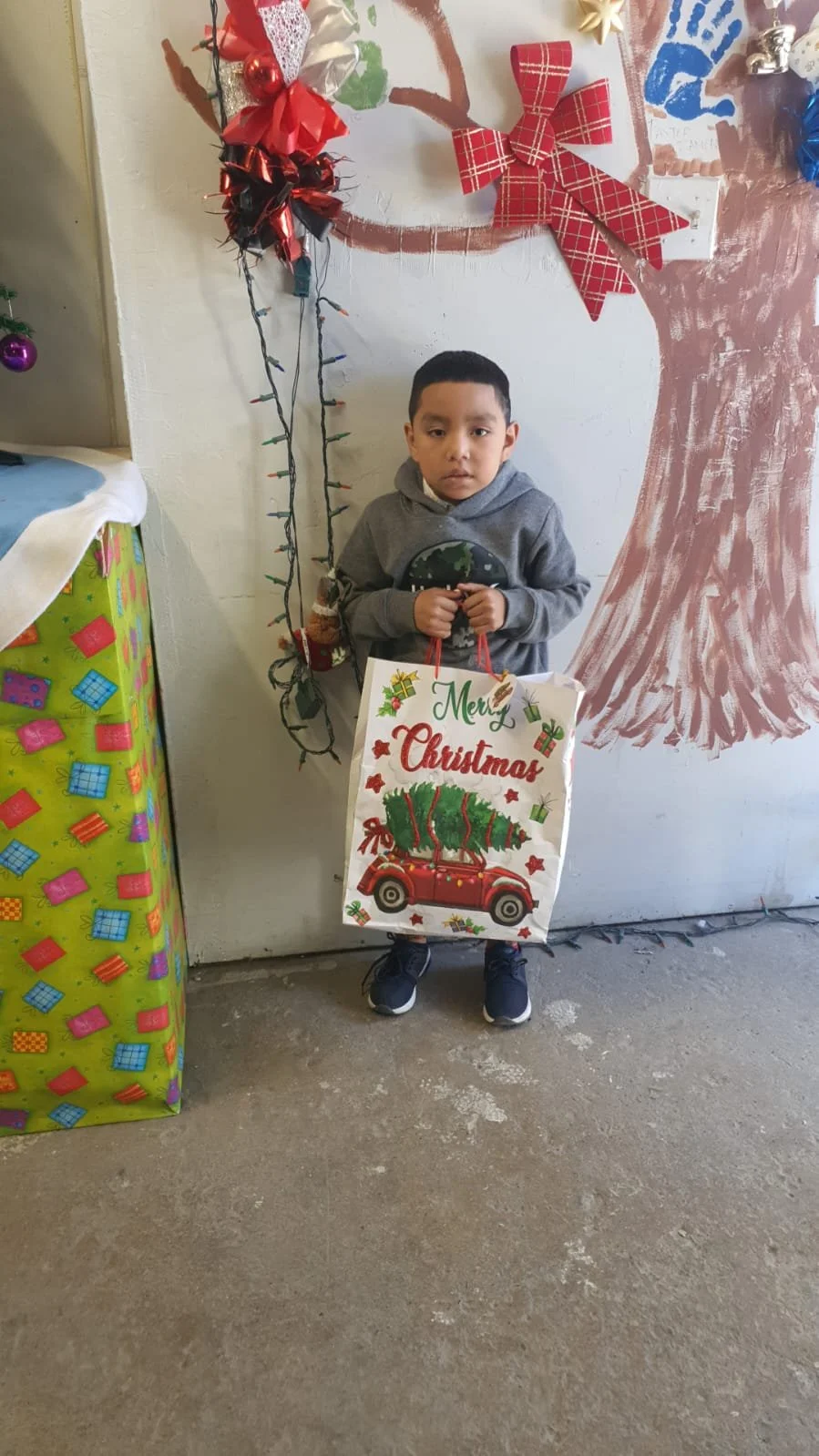
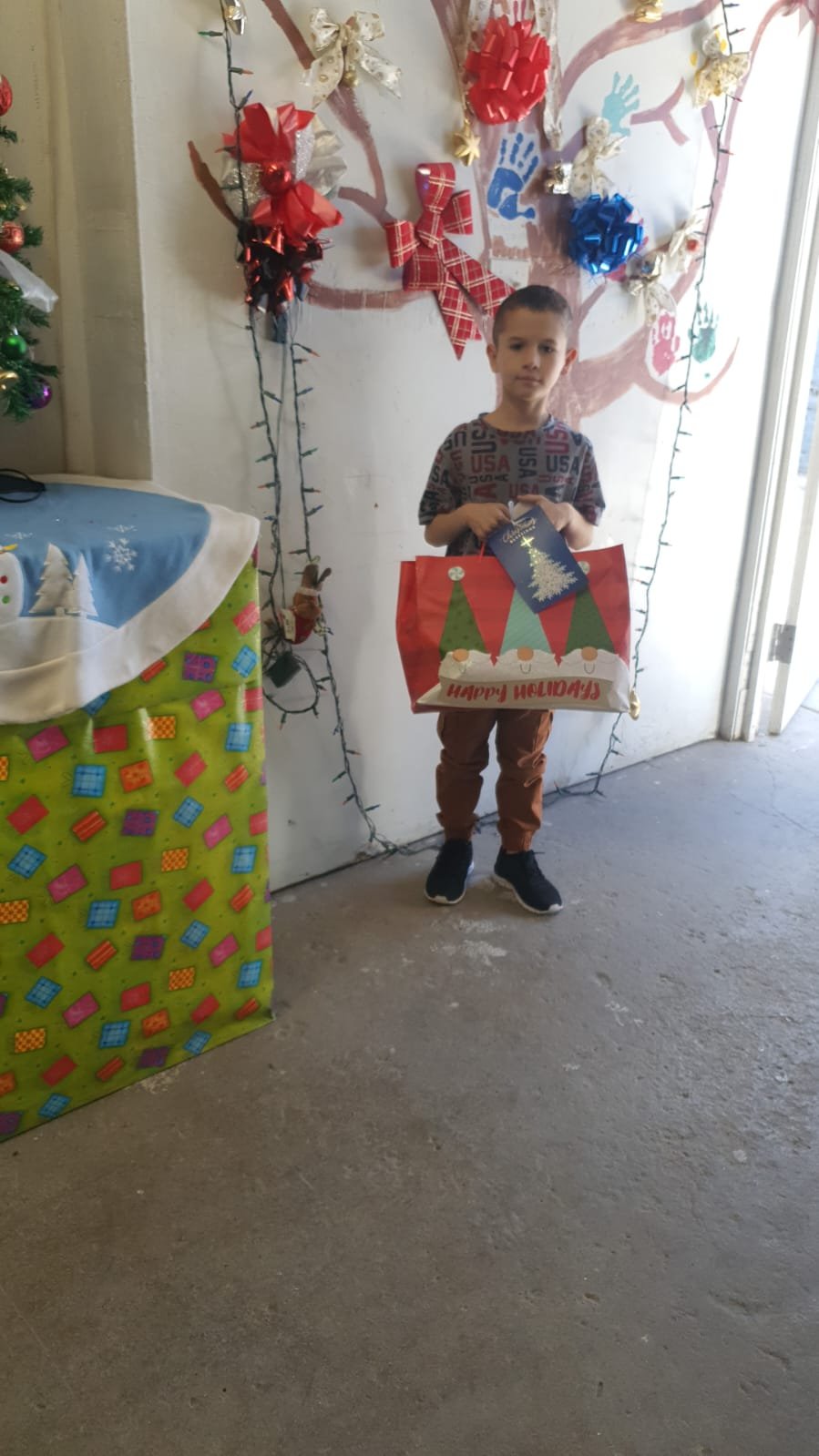
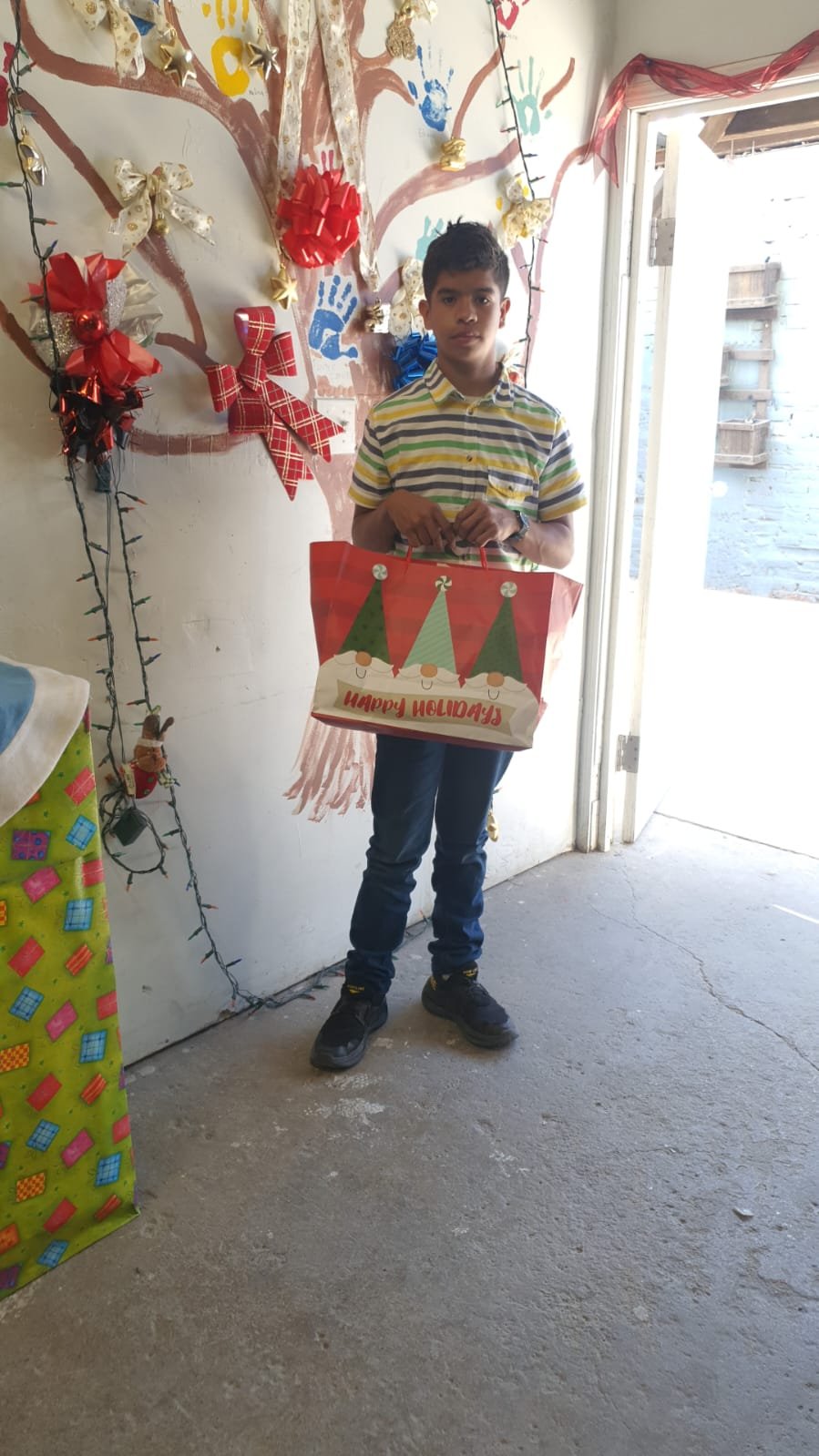
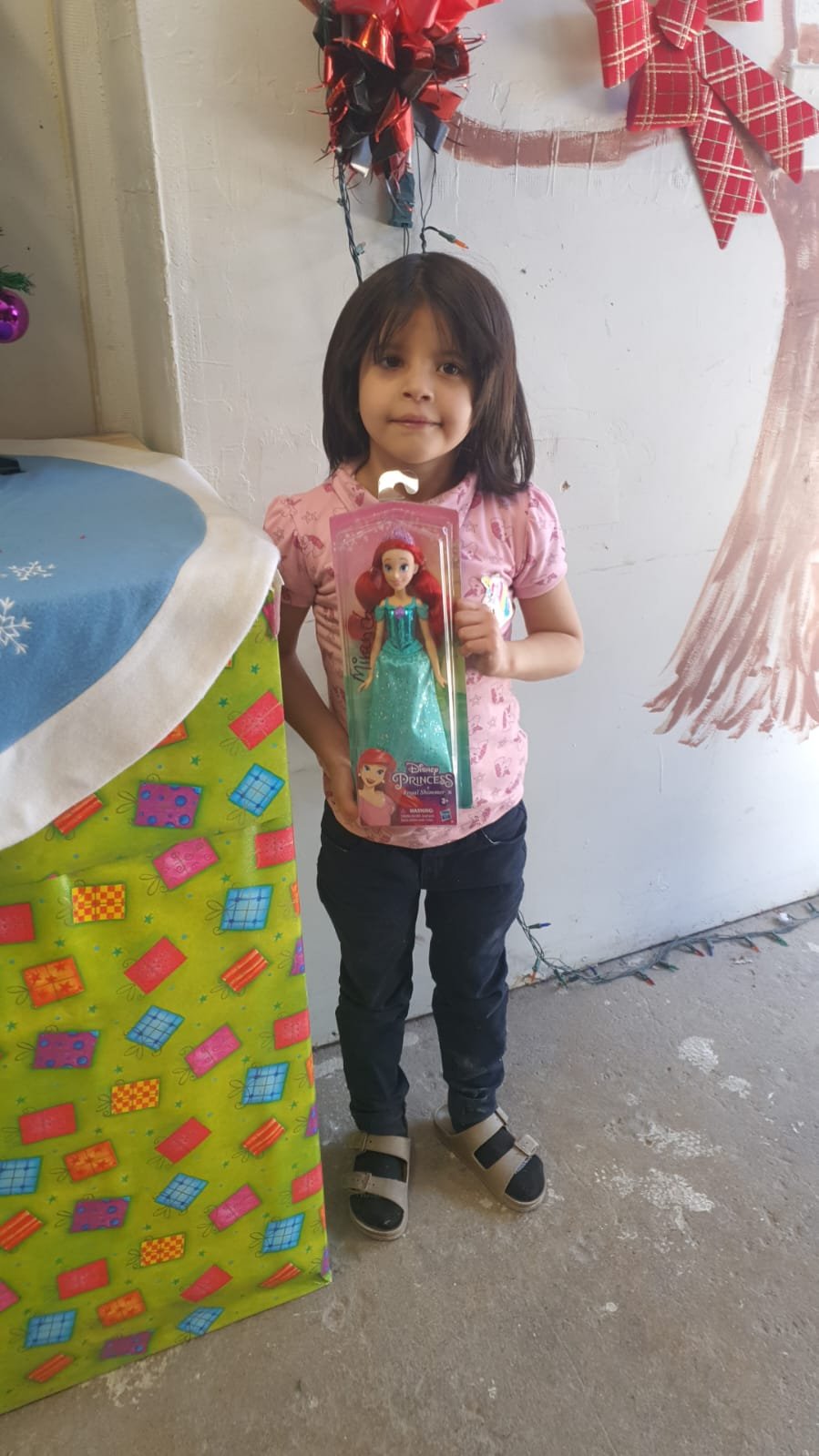
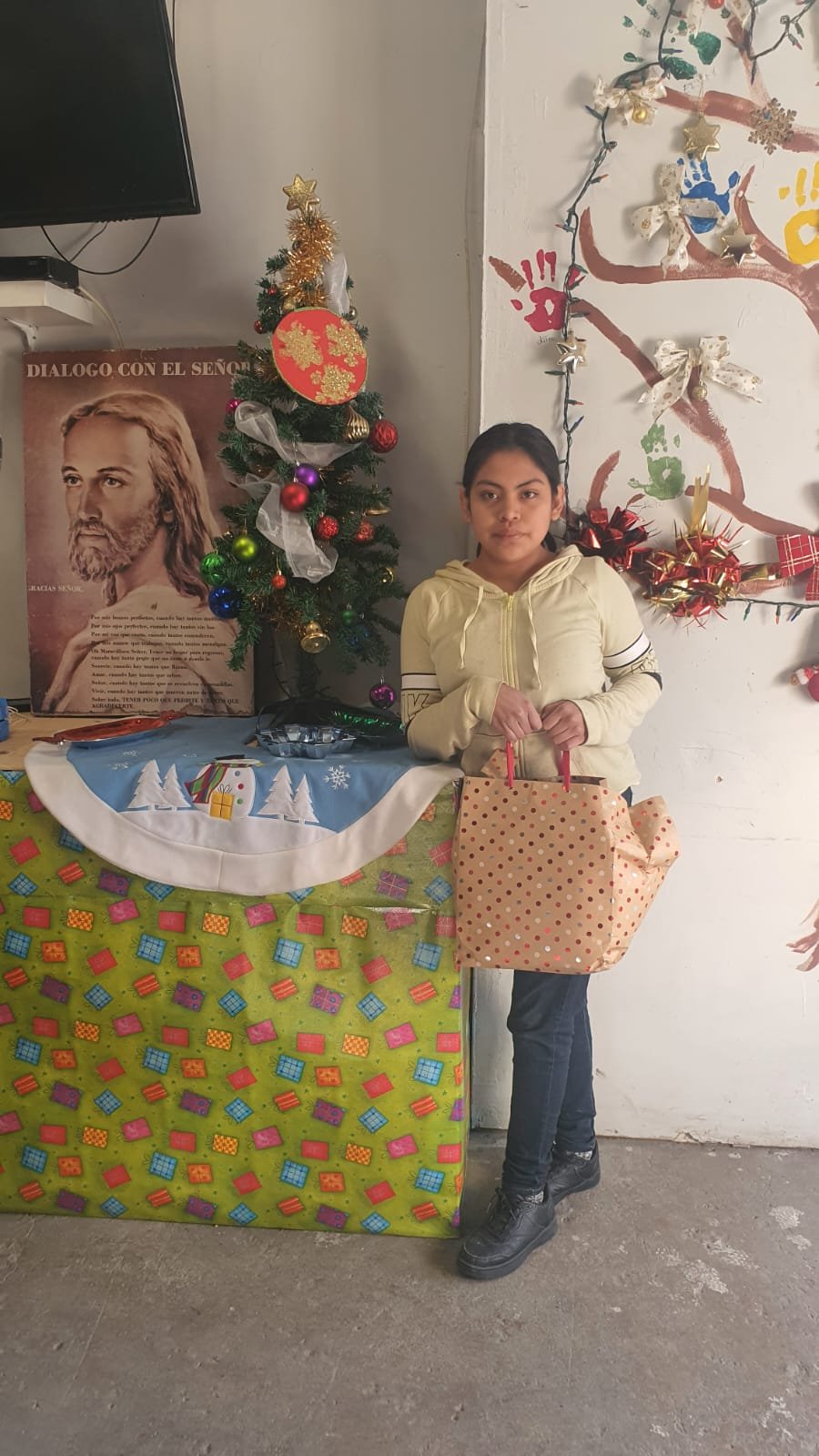
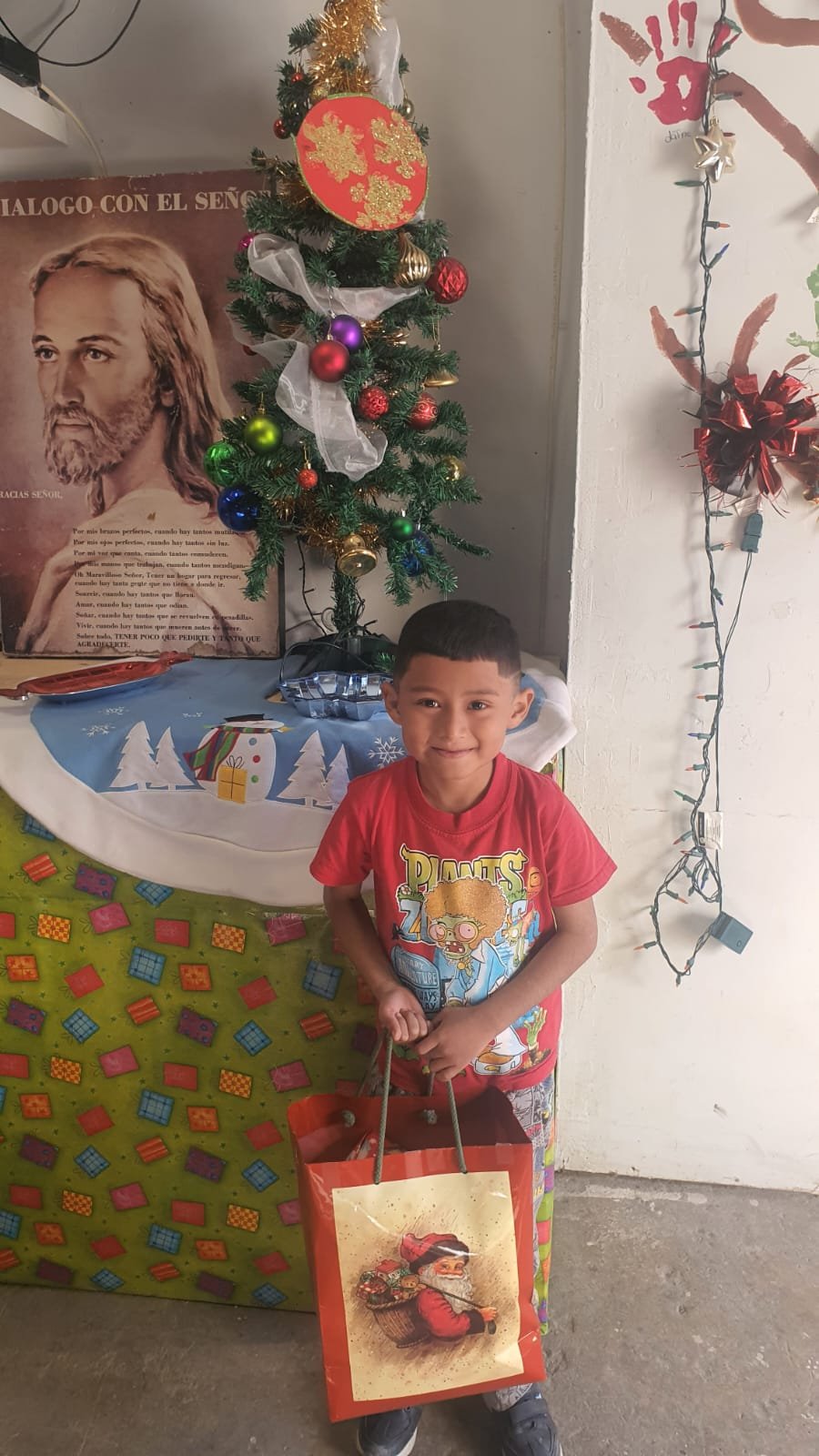
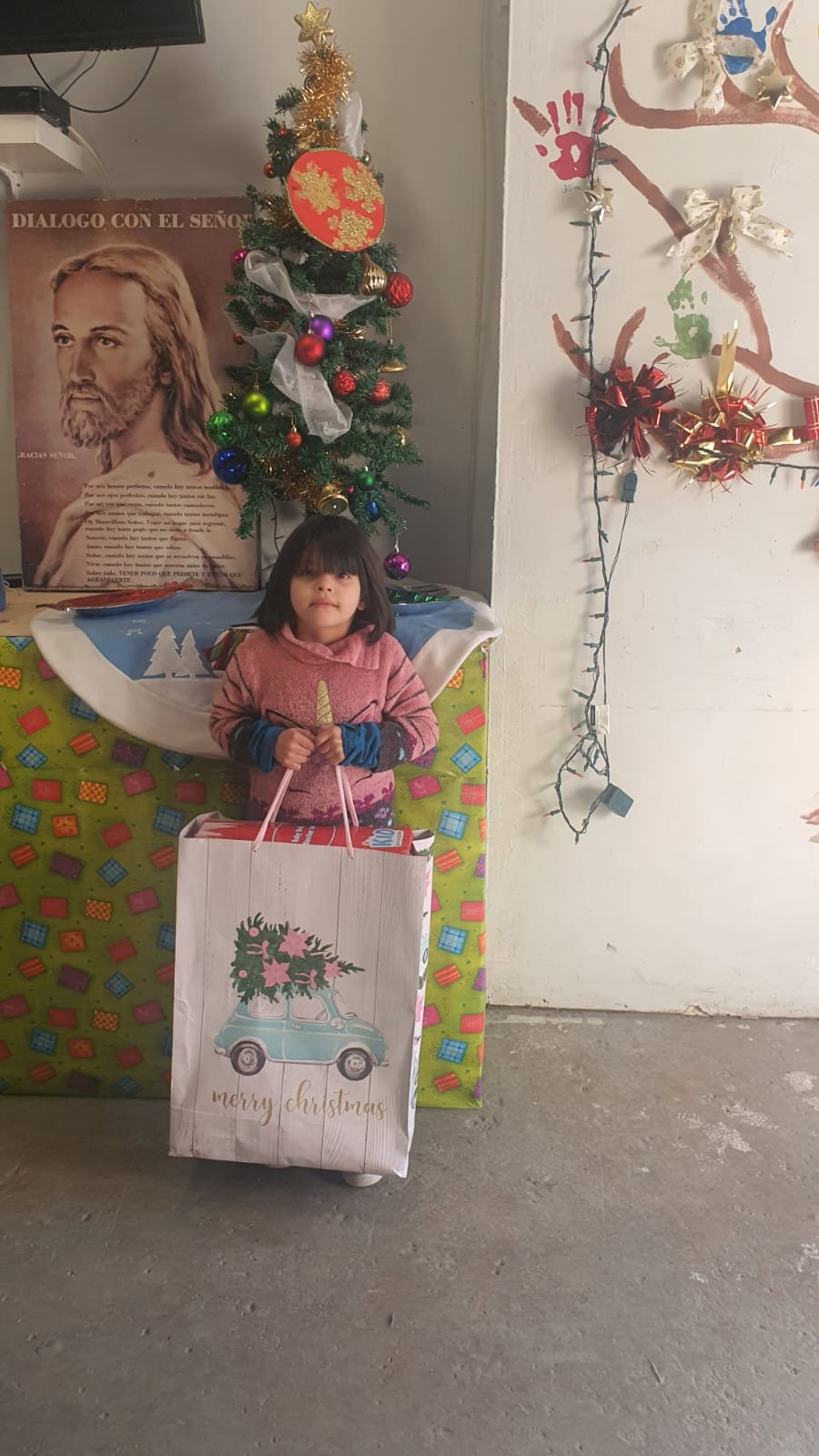
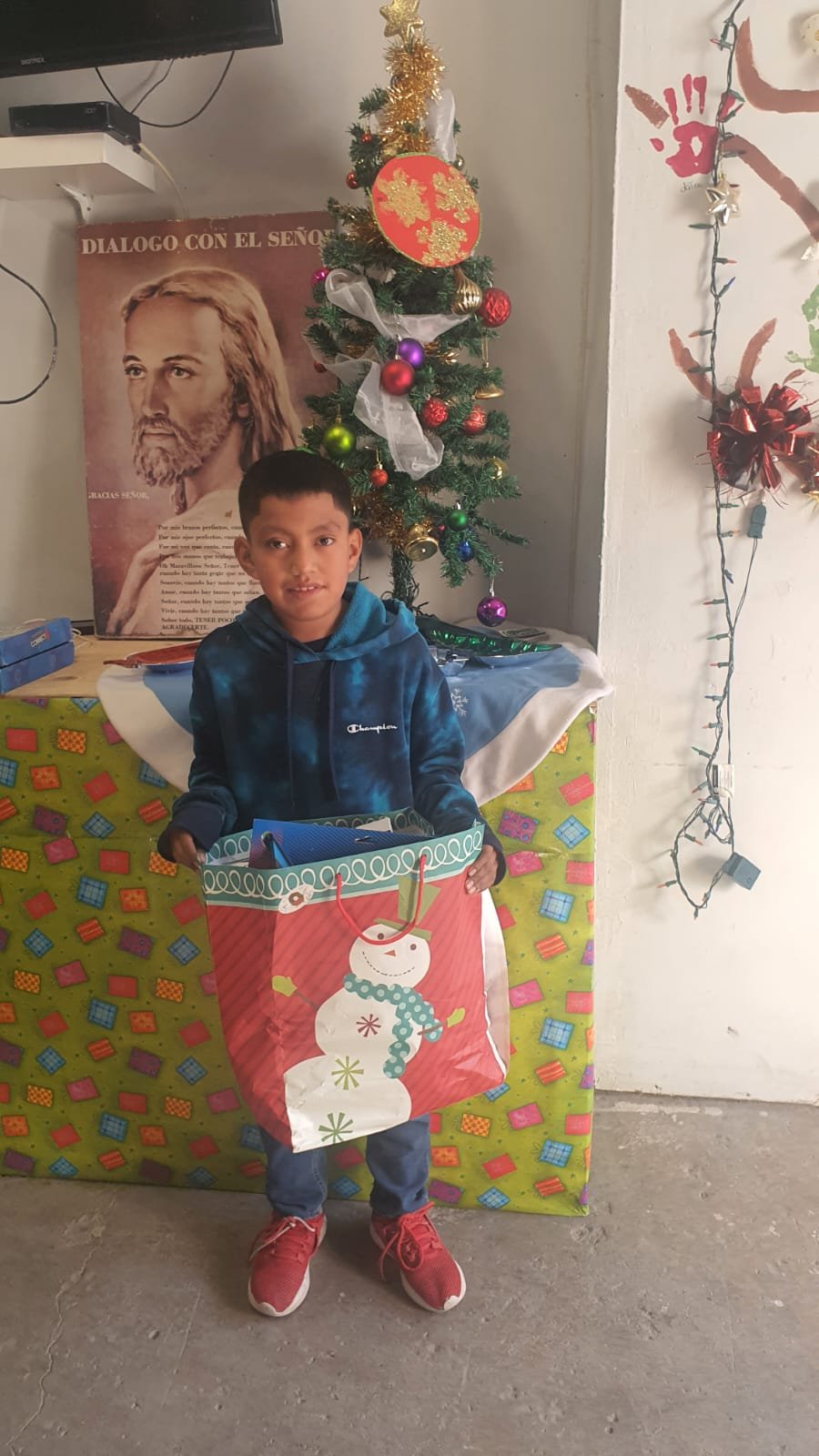
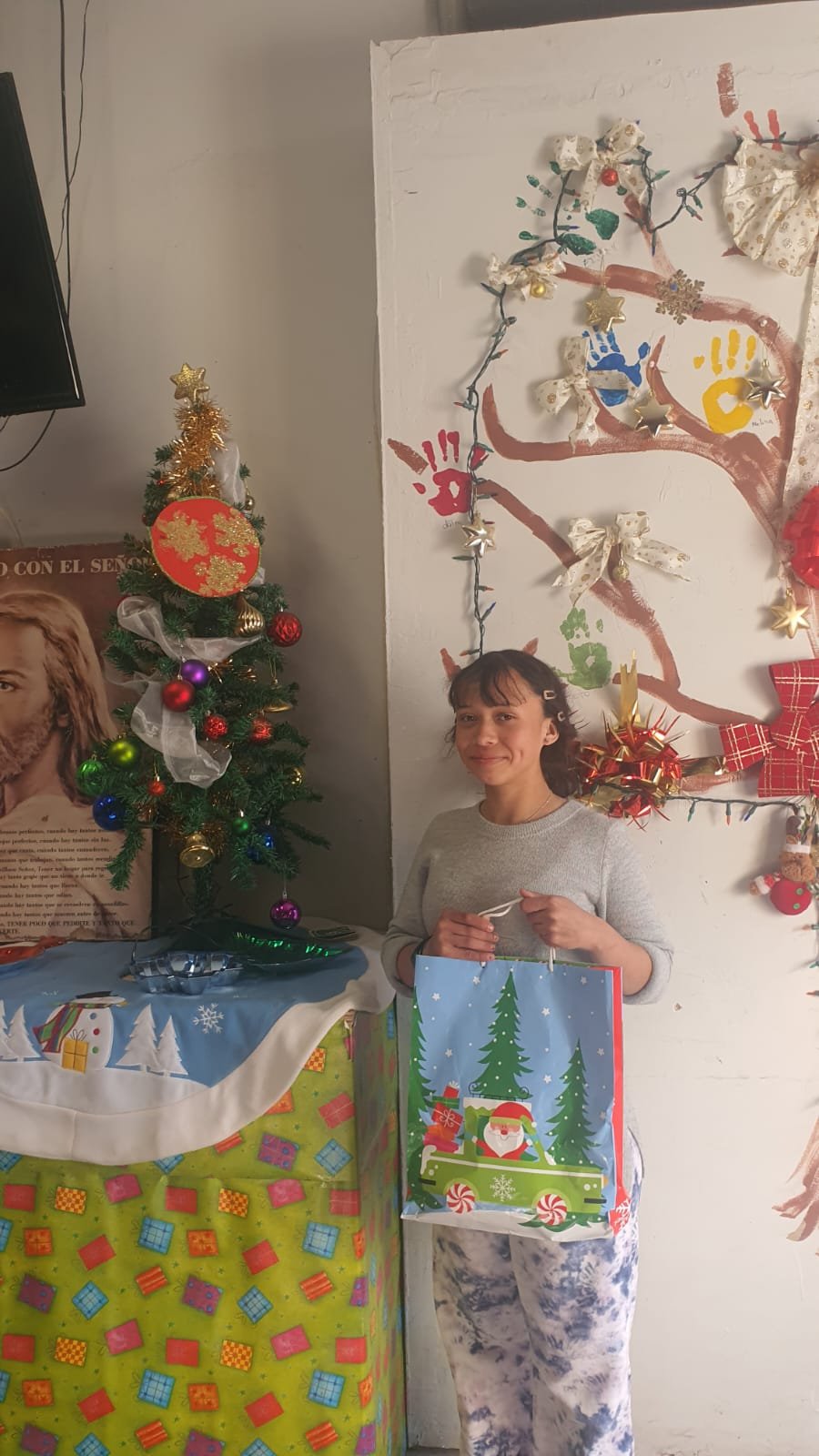
Thanks to all who shared gifts for our Angel Tree project. The gifts were delivered to Mundo Pequeno Especial - and here are some pictures of the children who received them!
Thanks to all who shared gifts for our Angel Tree project. The gifts were delivered to Mundo Pequeno Especial - and here are some pictures of the children who received them! May God bless them and you in your giving! Special thanks to Larry & Elena Tilton for working out all the arrangements.
Stayed tuned in 2023 as we make plans for a special work project at the Orphanage to deal with a rain water drainage issue.







THE CHRISMON TREE
CHRISMON TREE
DID YOU KNOW? Chrismons (Christ=Monogram) are tree ornaments that proclaim our Lord Jesus Christ through the use of symbols….
Exalting The Name of Jesus Christ
When I am lifted up from the earth, will draw all people to myself.”
John 12:32

DID YOU KNOW?
1. Chrismons (Christ=Monogram) are tree ornaments that proclaim our Lord Jesus Christ through the use of symbols.
2. The Chrismon’s Tree originated at Lutheran Church of the Ascension in Danville, VA in 1957. Chrismons, however, have come down to us through history. Chrismons designs are simple copies of symbols of Christianity from its earliest days.
3. Today the sign of the FISH and the anchor cross are 2 of the Chrismons still visible, etched in stone of the catacombs in Rome.
4. The evergreen tree is a symbol of Gods constancy. On the Chrismon tree tiny white lights and candles symbolize Christ as the light of the world.
5. A monogram of Christ, Chrismons are all made in combinations of gold and white. White is the liturgical color for Christmas and stands for our Lords purity and perfection. Gold represents His majesty and glory.
6. The source of inspiration for Chrismons comes from the Scriptures which are full of “Names of Christ”. All are illustrations of His character and work and are easily demonstrated in objects. Like parables, they are earthly symbols with heavenly meanings.
7. Most of our Chrismon ornaments are between 40and 50 years old and handmade by ladies of our church.
Take time after the service and examine our tree up close!
THANKS TO CHARLOTTE ARTHURTON for sharing this article, and for preparing our Sanctuary for Christmas, along with Lyn Arthurton, Jenn Brown, Dave & Kris Francis, and Bryant Taylor.
Bishop Eaton on SCOTUS Decision to overturn Roe v. Wade
Whatever personal perspective one might take on the June 24 abortion ruling from the Supreme Court, it is the legal framework in which we now minister, and I wish to speak a pastoral word at this time.

Bp. Elizabeth Eaton
Bishop Eaton Issues Pastoral Message on SCOTUS Ruling Regarding Roe v. Wade
June 24, 2022
“As we live into this new legal framework, we can respond to and minister in the current situation, for instance, by ministering to individuals who seek abortions; advocating for laws that provide free or affordable health care, child care and education; providing and promoting sex education; continuing to be a community of discernment where thoughtful and diverse perspectives can be shared and heard; and advocating for state laws that provide legal, safe and affordable abortions, and against legislation that would outlaw abortion in all circumstances (p. 9).”
Dear church,
Whatever personal perspective one might take on the June 24 abortion ruling from the Supreme Court, it is the legal framework in which we now minister, and I wish to speak a pastoral word at this time.
The Supreme Court has voted to overturn Roe v. Wade, removing federal constitutional protection for safe and legal abortion and leaving decisions about abortion law largely to the states. As a result, safe and legal abortion will likely not be accessible in every state. This church’s 1991 social statement Abortion argues that “the number of induced abortions is a source of deep concern” but teaches that the practice should be legal (pp. 3, 9-10). In other words, “Laws should be enacted and enforced justly for the preservation and enhancement of life, and should avoid unduly encumbering or endangering the lives of women” (p. 9). Overturning Roe v. Wade and placing decisions about abortion regulation at the state level encumbers and endangers the lives of all persons who need to make decisions about unexpected pregnancies.
First, as a pastor of this church, I want to acknowledge that this decision affects many people, especially those whose pregnancies unfold in complex situations and the people who love them. Many now find their moral agency restricted because federal law no longer guarantees access to legal and safe abortion. They already face difficult moral questions, and the Supreme Court decision only adds to their anguish. As our social statement reminds us, we have both the freedom and the obligation to serve neighbors in complex situations. As a church, we are called at this moment to recognize and spiritually support people who are struggling with decisions around pregnancy.
Second, as presiding bishop, I want to remind this church that, despite this new legal landscape, we continue to depend on our social teaching for guidance. Our social statement provides the moral framework for our church's communal discernment and ministry, holding in tension both the strong Christian presumption to preserve and protect all life as well as the complex moral situations in which pregnancy sometimes occurs. Our social teaching is complex and does not hew to clear categories or labels such as “pro-abortion” or “anti-abortion.”
That complexity is reflected in several points. The statement recognizes that pregnant persons have moral agency; they are the ones to make decisions about a pregnancy (see pp. 5-6). This church and its ministers trust them to decide but expect them to make such decisions in relationship—with God, self, partner, family, ministers and others.
I also want to underscore for the whole body of Christ the statement’s exhortation “that those who counsel persons faced with unintended pregnancies respect how deeply the woman’s pregnancy involves her whole person—body, mind and spirit—in relation to all the commitments that comprise her stewardship of life” (p. 5).
Further, our church teaching holds that there are no exclusive rights in pregnancy. A pregnant person does not have an exclusive right to abort a fetus at all points during the pregnancy. A developing life does not have an exclusive right to be born (p. 2). This church does not support abortion as a normative form of birth control but rather understands it as necessary in some morally responsible circumstances. This church does not condone late-term abortions except in extreme circumstances, which must be determined by the individual with their medical caregivers (p. 7).
This church acknowledges that individuals and religious traditions hold divergent viewpoints over when life begins. These divergent views are not only scientific but also biblical and cultural. The ELCA social statement acknowledges these ethical ambiguities and states that “the closer the life in the womb comes to full term the more serious such [moral] issues become.” (p. 7).
As we live into this new legal framework, we can respond to and minister in the current situation, for instance, by ministering to individuals who seek abortions; advocating for laws that provide free or affordable health care, child care and education; providing and promoting sex education; continuing to be a community of discernment where thoughtful and diverse perspectives can be shared and heard; and advocating for state laws that provide legal, safe and affordable abortions, and against legislation that would outlaw abortion in all circumstances (p. 9).
Finally, I wish to remind everyone that this church supports peaceful means of expression within a diverse society. Peaceful protest is a crucial element of civic engagement; violent protest is not, and this church reproves it. Likewise, this church is on record against hate speech. Let us be instruments for peace where there is none. Let us listen to one another. Let us serve the needs of neighbors in all the complexities life presents. God calls us to be for others, just as God in Christ is for us.
In Christ,
The Rev. Elizabeth A. Eaton
Presiding Bishop
Evangelical Lutheran Church in America
Pro-life AND Pro-choice...these are not opposites in my way of thinking
After Friday’s Supreme Court decision to overturn Roe v. Wade, at our home we sat at the breakfast table long after our meal discussing and sharing, reading Facebook posts, wondering where we were headed. Our neighbor came back from a rally at the County Administration Building, visibly upset. The country is in turmoil. As I pondered, not about the need to say something, but what to say…something pastoral, not to throw more fire on the flames as we have seen done recently, my wife came across these comments from her District Superintendent of the California-Pacific Annual Conference of the United Methodist Church, Rev. Sandy Olewine. Her words moved me in the depths of my spirit - and I shared them with the congregation today. Several people have asked for a copy - and here it is.
After Friday’s Supreme Court decision to overturn Roe v. Wade, at our home we sat at the breakfast table long after our meal discussing and sharing, reading Facebook posts, wondering where we were headed. Our neighbor came back from a rally at the County Administration Building, visibly upset. The country is in turmoil. As I pondered, not about the need to say something, but what to say…something pastoral, not to throw more fire on the flames as we have seen done recently, my wife came across these comments from her District Superintendent of the California-Pacific Annual Conference of the United Methodist Church, Rev. Sandy Olewine. Her words moved me in the depths of my spirit - and I shared them with the congregation today. Several people have asked for a copy - and here it is.
Pro-life - Pro-choice
these are not opposites in my way of thinking.
I am pro-life in all its fullness and complex beauty.
I am for children being able to go to school without learning armed shooter drills.
I am for addressing the systemic issues that keep people trapped in poverty, particularly addressing the racism that feeds it.
I am for treating refugees and immigrants with dignity and respect.
I am for people being free to love who they love and to express themselves fully as who they know themselves to be as beloved children of God.
I am for a commitment to restorative justice, transforming a broken judicial and legal process.
I am for humans having the right and support to make difficult health decisions without the fear of coercion and judgement.
I am for people naming the Sacred as they experience it and expressing that relationship through the traditions that bring peace, wholeness and mercy, compassion and love to life in the world.
All of that and more is what being pro-life means to me
…and is what leads me to also be pro-choice.
Women are fully human, actualized beings, capable of weighing difficult decisions and not narrowing those down to sound bites.
o They can grieve decisions that are difficult and they can continue to function.
o Women have the right to care for their health and well-being.
o The State imposing limits on that when those limits are not based on best known medical practice but on inconsistent political posturing and religious half-truths is incompatible with democracy.
We women will not make the same decisions when there are hard ones to be made. But if we create community that has integrity, compassion, trust and respect at its core, we can hold the space to honor each other’s difficult choices.
The first step may be stepping away from sound bites and slogans. Life is complex and messy and beautiful and challenging. Sound bites and slogans too often simplify and divide and really don’t lead us to beloved community.
Today, we did not take a step towards a better world.
Today, we did not become more pro-life.
We revealed, actually, how little we actually think about so much.
We have choices ahead of us about who we will be as a nation.
Today, I am not optimistic about the choices we will make.
Sandy Olewine, District Superintendent
California Pacific Conf UMC
Rest in peace, Bill Horne - VP of the ELCA
I was at the Padres game on Friday night (they lost to the Phillies, 4-3), when I glanced at my phone and saw a message from the Florida Bahamas Synod: William “Bill” Horne, who had served that Synod as its Vice President, and who had gone on to serve on the ELCA Church Council and then in 2016, to be elected to the position of Vice President - the highest position for a lay person in the ELCA - died of a heart attack last weekend, three weeks before his scheduled retirement.

Bill Horne, VP of the ELCA
I was at the Padres game on Friday night (they lost to the Phillies, 4-3), when I glanced at my phone and saw a message from the Florida Bahamas Synod: William “Bill” Horne, who had served that Synod as its Vice President, and who had gone on to serve on the ELCA Church Council and then in 2016, to be elected to the position of Vice President - the highest position for a lay person in the ELCA - died of a heart attack last weekend, three weeks before his scheduled retirement. I was shocked - Bill was a friend, always a person who was open, warm, who lived his faith in deeply practical and spiritual ways. As a retired Air Force Colonel, he was for the last 20 years the City Manager for Clearwater, FL and oversaw great new developments in the functioning of the city structure. He was committed to making the ELCA all that God wanted it to be - and he was open about saying we’ve got a real journey ahead of us. In all this, however, he was never too busy to share a listening ear and a generous spirit of encouragement. The last time I saw him was in 2019, when he was the ELCA Representative to the Pacifica Synod Assembly - that was before I was called as the new Pastor at Carlton Hills. His funeral took place today - and the headlines about their city manager spoke of his faith at work in his life: “Clearwater remembers Bill Horne for ‘how he changed lives’.”
Here’s an excerpt:
CLEARWATER — As the community gathered Saturday at Calvary Church to remember William Burt Horne II, they didn’t just share his achievements as Clearwater’s city manager for 20 years.
It was more about how he carried himself, the way his example impacted others.
Horne went about his job with joy and a laugh that would make his feet lift off the floor and his hands rise in the air, as Mayor Frank Hibbard remembered.
“It was how he changed lives,” Hibbard said. “How he changed lives. How many of us can say that?”
———————————————-
Rest in peace, Bill - may God’s light shine upon you.
Did you come as yourself today?
The video that follows is titled: MASKS. We all like to make a good impression, but when it comes to God and the church, honesty is the best policy.
This is the 2011 Easter video of www.centralchristian.com. with thanks!
Not dead yet...
I don’t have the exact numbers at hand, but I am fairly certain that there hasn’t been a time since 1980 when the percentage of white mainline Protestants in the general population was HIGHER than the percentage of white evangelicals. That’s at least four decades - maybe longer. But this is a genuine shift …toward mainline Protestantism.
For those who think our church (churches?) are dying, I just came across this article by Diana Butler Bass that I thought others might like to read. Here it is - the whole thing.
Pastor Andreas
White mainline Protestants now outnumber white evangelicals, and conventional wisdom goes out the window.
Diana Butler Bass
Jul 8, 2021
In the early 1990s, I was a member of Trinity Episcopal Church in Santa Barbara, California. At the time, few people attended services in the nearly 700 seat neo-Gothic sanctuary. On a particular Sunday, an usher counted the people at worship. Fewer than 60. “It can’t get much worse,” she thought as she dusted cobwebs from the back pews. “Pretty soon, we’ll be closed.”
Trinity didn’t close. Through a remarkable set of circumstances, committed leaders, and hard work, the church came to life once again. In the four years in which I attended, Trinity grew from that 60 to over three hundred, and kept growing for the next several years. It is still a vibrant, vital congregation.
How did this happen? Trinity broke all the conventional wisdom of church growth. They preached politics from the pulpit. They married gay members before marriage equality was legal in California. They went to protest marches. They innovated liturgy. They read liberal theology books, studied feminist and liberation theology, embraced contemporary biblical criticism. They followed no plan - except for believing that Christianity was an adventure and that Christian community could be transformative, challenging, and deeply spiritual in and for the world.
In those days, most historians and sociologists of religion taught something called “The Kelley Thesis.” In 1972, Dean M. Kelley wrote a book entitled Why Conservative Churches Are Growing that suggested that conservative churches with strict boundaries and sect-like tendencies would always grow while liberal churches that had accommodated to culture would always decline. For the two decades following his book, as mainline numbers sank and evangelical churches flourished, Kelley seemed right. In the minds of most observers of American religion, Why Conservative Churches Are Growing had become a statement of fact: Only conservative churches can grow. When people repeat this mantra, they probably don’t know where it originated. It has become a cultural commonplace.
Trinity declined. It almost closed. But then, it didn’t. In 1994, I wrote about it in the local newspaper. And, since then, I’ve written about how wrong-headed the Kelley thesis is - suggesting that there would come a time when evangelical churches would go into a demographic tailspin. I optimistically hoped that the pendulum of conservative and liberal Protestantism might swing (at least a little) in the direction of mainline churches again. Because it really isn’t about conservative and liberal. Christianity in (or, perhaps, the “Christianities” of?) America involves a host of complex concerns about generational shifts, political issues, cultural tastes, and, most of all, the ever-present spiritual wandering of a people shaped by religious experience and a nomadic soul.
But, even two decades after Trinity in which time I’ve written countless columns, eleven books, and delivered thousands of lectures and sermons on these subjects, I was surprised by a tweet this morning from Natalie Jackson of Public Religion Research Institute (full disclosure - I was on the PRRI board for ten years):
For the full report, “The 2020 Census of American Religion,” click HERE.
Here’s the full version of the same chart (with dates - they weren’t visible on the tweet):
Look closely. In 2016, white mainline Protestants sank to their all-time low as a percentage of the American population: 12.8% In the four years following, the number starts ticking up - reaching 16.4% now, the highest percentage since 2009.
At the same time, the percentage of people who identify as white evangelicals has been sinking - in an astonishing fall from 23% at the 2006 baseline in this data set to 14.5% now.
I don’t have the exact numbers at hand, but I am fairly certain that there hasn’t been a time since 1980 when the percentage of white mainline Protestants in the general population was HIGHER than the percentage of white evangelicals. That’s at least four decades - maybe longer. But this is a genuine shift away from white evangelicalism toward mainline Protestantism.
On July 8, 2021, shortly before its 50th birthday, the Kelley thesis died.
Good riddance, I say.
* * * * *
Now what?
It is reasonable to assume that a certain percentage of former white evangelicals are making their way toward white mainline churches - and it is important to be clear about what is going on regarding this shift.
First, people are leaving white evangelicalism for a host of political, social, and theological reasons. Some of the best research suggests that people are leaving conservative churches because they don’t believe what those communities teach any longer. “Believe” is a fluid word here - leavers may still believe (for example) in the Trinity or the Virgin Birth but they don’t believe that Trump was ordained by God to be president or that LGBTQ people are lesser or that women should submit to their husbands. Or they may not believe the Bible is true and may be struggling with fairly conventional views of race.
For some reason of “belief,” however, they increasingly felt outside of white evangelical communities, their relationships strained, and they made a difficult decision to walk away. Many of those leaving white evangelicalism are steeped in conservative theologies and know the Bible well. They are often sad, angry, and wounded, and perhaps tentative about participating in new churches. They are used to particular styles of worship, lay involvement, and church offerings (simple things like decent parking lots and babysitting for kids) and may find even the most welcoming and inclusive mainline church lacking in such things.
Second, trends aren’t destiny. Just because this is happening now doesn’t mean it is going to happen forever - or even for the next decade. It could be that the mainline is a way station for people who will eventually leave Christianity altogether. But there’s no knowing that. People in mainline churches should understand that four years of growth does not validate everything that the denomination does or every custom or practice in a particular congregation.
This is a moment to listen well to those who may be coming your way. For heaven’s sake, don’t ever tell a newcomer “we don’t do it that way” or “don’t sit here! that’s my pew!” This shift is occurring, in large part, because white evangelical churches have failed, not necessarily because mainline churches are doing everything right. Hubris is not the right response to the data, but self-reflection is.
Third, share your story with wisdom, grace, humility, and hospitality. When a major religious shift is underway, there’s nothing more important then to tell your story. The people who are brave enough to walk in your doors or spend time reading your website can’t read your mind and don’t remember the former pastor or the beloved member who died twenty years ago. They don’t want to know when the building was renovated or who donated the windows. Your story isn’t a timeline - it is about the spirit of community, what motivates you, where you find meaning, your hopes and fears and gifts.
Mainline churchgoers generally assume simple things like infant baptism, the flow of the Christian year, and written liturgy and lectionaries. They know multiple verses of old-fashioned hymns, like classical music, and can tell the difference between a Calvinist and a Wesleyan. Mainliners also regard private religious experience pretty highly, don’t wear their faith on their shelves, know lots of stuff about capital campaigns, bad sound systems, and broken air-conditioners, and really like helping people. Oh. And funerals. Mainline churches do those well. In short, mainliners live inside a particular history, are shaped by poetic words, remember the value of quiet faith and thoughtful reflection, show God through the works of one’s hands more than in words, and understand failure and death. In other words, the practice of mainline Christianity is (not always, but in large part) different than the assumed practices of most of American evangelicalism. Mainline types need to be prepared to explain that - all of it - to newcomers. Assume nothing. And be prepared to laugh - and learn a few things about yourself in the process of knowing and telling your story.
* * * * *
Over the next weeks and months, there will be much more to write, many arguments to be had, and challenges to be faced in regard to this shift. There will be a conversation about labels and what counts as “mainline” and whether or not the emergent church movement had an impact on all this. There will be important theological and social engagement with how race and racism has played in the shift and how it will play out in the future. I suggested a couple more things in this Twitter thread about leadership and change. Despite all the unanswered questions, the implications of the shift couldn’t be more important for politics, social issues, and culture - as well as the future of Christianity in America in a post-Christian age.
But, right now, it is enough to know you are living in history. A really important moment is here. The story of an old religious tradition hasn’t ended the way critics once thought. Paraphrasing the words of the old Monty Python sketch, “we’re not dead yet.” We’ve just been awaiting resurrection.
Watching a mustard seed grow
In today’s Gospel text (Mark 4:26-34), Jesus tells us about the mustard seed and how it grows into a bush that all the birds can find shade in. How is God calling us to grow - that we would be the ones who help others find their support, their “shade” - their place of refuge? We can compare it to the Ezekiel text - also finding birds who have their place to sit in the shade - which comes after a time of extreme difficulty but eventually turns into a promised blessing. We have also been through difficult times - but God will send times of blessing - and strengthen us to be a blessing to others! God’s peace - Pastor Andreas+
Watch the video to see the mustard seed’s growth happen in time lapse!
A few reasons why people don't come to church...
Our Gospel text in Mark 3 - really just the beginning of the Gospel, has Jesus already in hot water with the community, the religious authorities, and even his own family. Why? What brought on the opposition so quickly? Jesus is offering a new way to be the gathered community, a new way of saying you are welcome here. It is all about hospitality.
I found this YouTube on David Lose’ s blog [In the Meantime…] from a few years back - it was put out by a congregation that wanted to share its invitation to all people. I wonder if we could make it ours. Maybe you want to share this with others in the weeks ahead? Let me know what responses you get!
Pastor Andreas+
NICODEMUS COMES TO JESUS
Nicodemus came to Jesus by night (John 3:1-17…

John 3.1-17: Nicodemus
Nicodemus came to Jesus by night (John 3:1-17, Lent 2A). Their conversation included some of the most familiar - and contested - words in scripture about being born again - or born from above. The meaning of their conversation is not as easily interpreted by visual artists, but the setting and staging of the visit offers food for visual thought.
Henry Ossawa Tanner (1859-1937) painted Nicodemus' visit to Jesus. Along the way to his final composition he painted several different studies. Some things change; others are consistent through all versions. The changes and the consistencies help tell the story.
In all three works here (two studies and a completed oil), the conversation appears to take place outside, on the roof of a house. In all compositions, Jesus sits with his back to the cityscape. Nicodemus, in looking at Jesus, looks out over the people and buildings of the city. In the finished oil, Jesus' face is a warmer tone than that of Nicodemus. Jesus' face is highlighted by the golden light that shines up the stairs. Nicodemus, by contrast, is shaded in the cool blue-gray of the night.